“Luna Rosa” began with a melody composed by Eduardo Sáenz, father of Rafaella Sáenz, on the guitar. It flows from F# and dances through A5, E, D, B. After weeks of searching for the right vocal composition, the moment arrived with such serendipity that the song naturally unfolded in a single sitting, with her family’s love as her main source of inspiration.
Luna Rosa was composed as an intimate dialogue between emotion and intuition. The song emerged during a moment of heightened sensitivity, when the moon—often associated with transformation, reflection, and the subconscious—became the central symbol through which the lyrics unfolded. Luna Rosa, the pink moon, represents softness, vulnerability, and renewal, themes that guided both the lyrical and musical direction of the piece.
At its core, Luna Rosa is a symbol of surrender. Rather than building toward intensity, the song creates space for introspection. The emotional tone is gentle yet heavy, carrying a sense of balance through acceptance. The song makes the listener feel one with the music, as if floating within a dream or resting beneath moonlight. This is the same feeling she expresses and shares with others. She invites the audience to fully experience it through the official music video and art visualizer, animated and directed by her incredibly talented cousin, Andrés Fernández from Manta, Ecuador.
Musically, the production was developed professionally by Pablo Berwanger from Porto Alegre, Brasil, a producer she has had the honor of working with and learning from since she was eight years old-in collaboration with Issac Zeas, professional guitarist and musician from Quito, Ecuador. The chord progression moves slowly, emphasizing emotional cycles—how feelings return, evolve, and dissolve over time. The melody mirrors the song’s intention: to feel organic rather than performative. The tempo never rushes, encouraging the listener to slow down and remain in presence.
The lyrics of Luna Rosa were written intuitively, guided more by sensation than structure. Images of night, light, and color appear throughout the song, serving as metaphors for emotional states and memories rather than literal descriptions. The moon becomes both an observer and the main character—watching, reflecting, and silently witnessing transformation—reinforcing the idea that emotional clarity arrives gradually.
The creative process behind Luna Rosa is deeply personal. The song evolved naturally, with moments of silence being just as important as sound in giving meaning to each note. Revisiting the song over time always feels like revisiting a memory, with each listen offering new understanding.
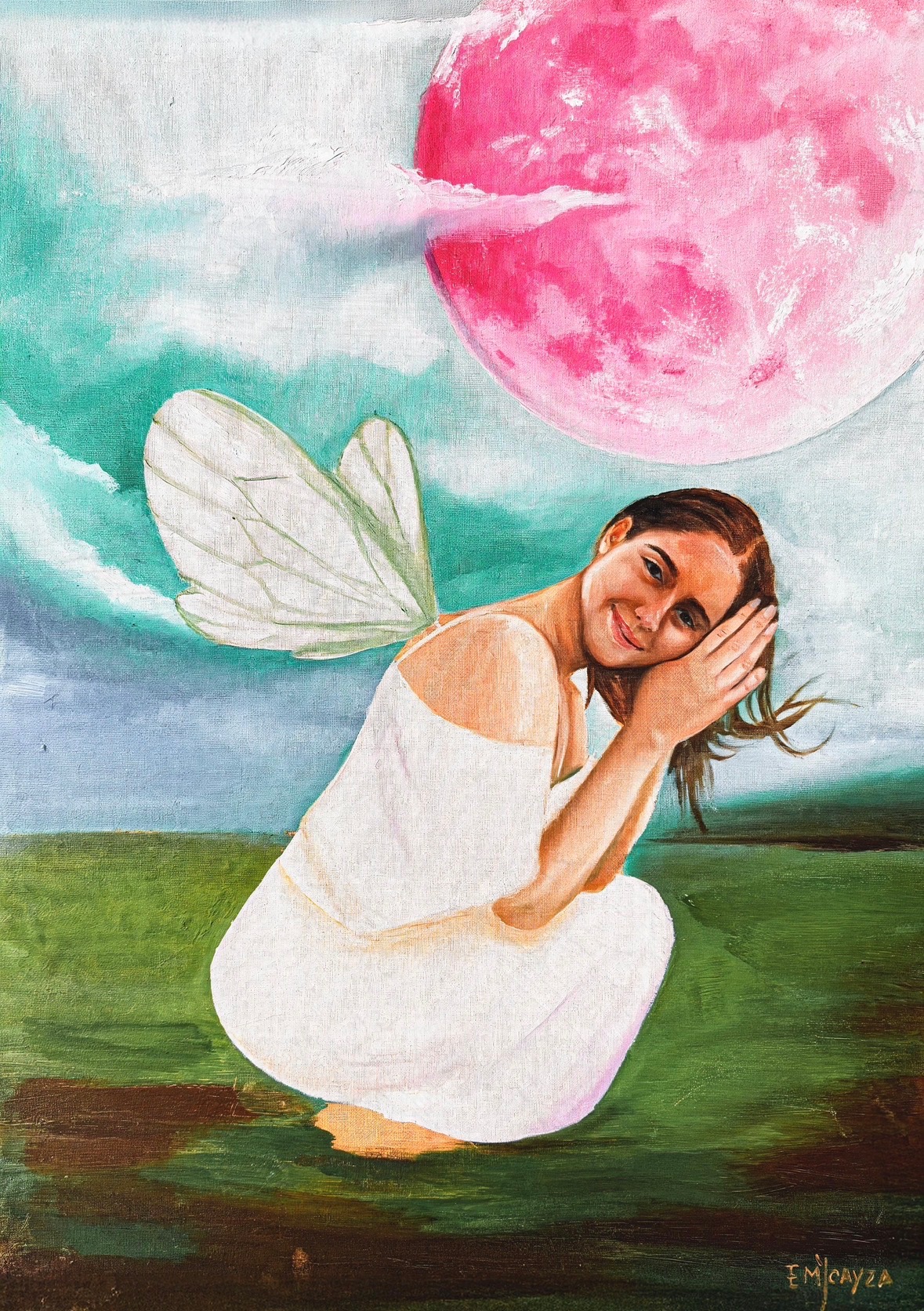
The cover art for Luna Rosa, painted by her cousin, the wonderful Ecuadorian artist Emilia Loayza, serves as a visual extension of the song’s message. Portraying Rafaella with angel wings is not meant to represent perfection, but rather the innate purity that exists within every human being—the Soul. The wings symbolize the quiet connection between the human and the divine—a reminder that spirituality is not something distant or unreachable, but something already within us. This image reflects vulnerability and innocence rather than power, emphasizing that happiness and freedom can be found in softness, honesty, and surrender. Just as the song moves gently through emotion and reflection, the cover invites the viewer to see the human form as sacred, inherently connected, while still rooted in earthly experience.
Ultimately, Luna Rosa represents a moment to honor softness, intuition, and authentic sound healing. Through Indie Rock, Rafaella Sáenz invites her listeners and community to slow down, to observe their healing, to feel without explanation, and to recognize beauty in vulnerability. Like the moon itself, Luna Rosa does not demand attention; it simply glows—authentically.
Official Video:
https://youtu.be/GMLxkkt4HAA?si=kxOlQE5HVA-Hr0nr
Official Links:
https://link.me/rafaellasaenz